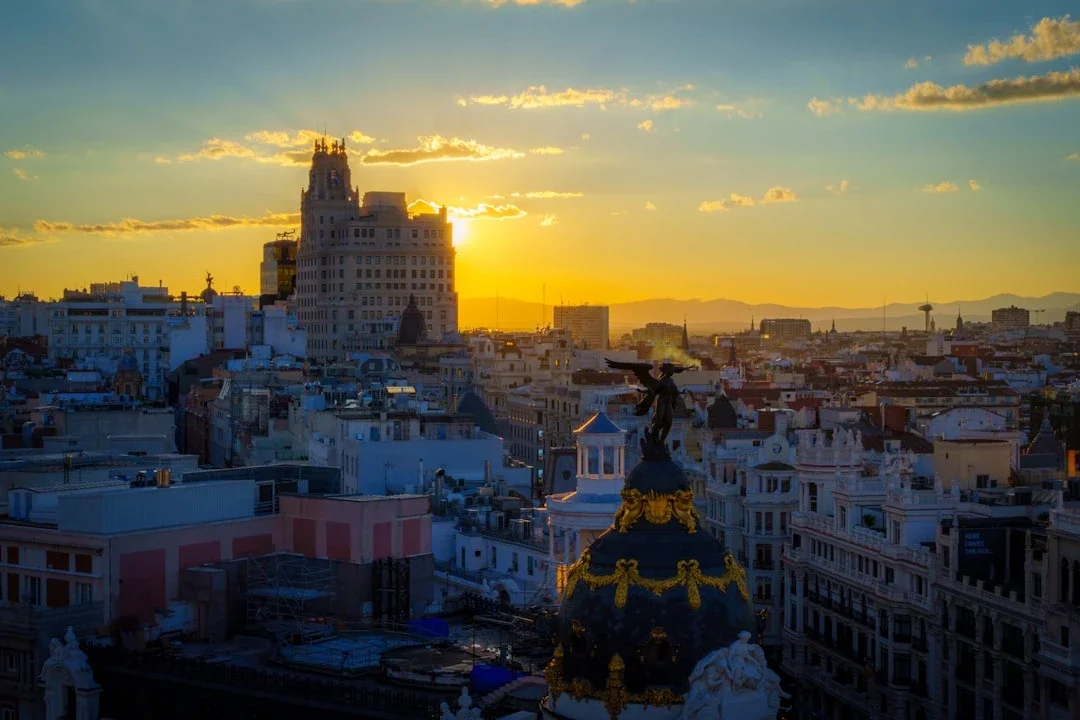
Madrid consistently ranks among the safer major European capitals, with a street-level crime rate that is low by international standards. Violent crime against tourists is rare, and the city center is well-lit, well-policed, and active well into the night. That said, petty theft — particularly pickpocketing — is the one risk worth taking seriously, and it follows predictable patterns that are easy to guard against.
The highest-risk areas for pickpockets are the ones you will spend the most time in: Puerta del Sol, the Gran Vía, El Rastro flea market on Sunday mornings, the area around the Prado Museum, and the Madrid Barajas Airport terminal corridors. Crowded metro stations — particularly Sol, Gran Vía, and Callao on Lines 1, 2, and 3 — are active hunting grounds. Thieves typically work in pairs or small groups; one creates a distraction (a spilled drink, a map question, someone bumping into you) while another reaches into bags or pockets. A cross-body bag worn in front, or a zippered inside pocket, removes most of the opportunity.
Scams to recognize include the "rosemary sprig" approach near Plaza Mayor and the Royal Palace, where someone presses a sprig into your hand and then demands payment. The three-card monte shell game still appears near tourist corridors — it is illegal and designed so you cannot win. Unlicensed taxi touts outside Barajas arrivals will quote flat rates that end up far above the legal metered fare; always use the official taxi rank or a pre-booked ride-share app. At restaurants, glance at the menu price before ordering, and check your bill — overcharging in tourist-heavy terraces does occur, usually through uncommunicated cover charges.
At night, the Malasaña, Chueca, and Lavapiés neighborhoods have vibrant late-night scenes that are generally safe. The area around Calle Montera, just off Gran Vía, is a known red-light corridor and can feel uncomfortable for solo travelers late at night — it is not dangerous in a violent sense, but worth knowing. Lavapíes has seen occasional tension at political demonstrations; check local news if you notice unusual activity.
For emergencies, the universal EU number 112 connects to police, fire, and medical services with English-speaking operators available. The National Police (Policía Nacional) handle tourist-specific complaints and theft reports at 091; the local city police (Policía Municipal) are reached at 092. If you are robbed, you will need to file a formal report — called a "denuncia" — either at a police station or online via the Policía Nacional website, which is typically required for travel insurance claims. Keep digital copies of your passport and travel insurance policy separate from the originals.
The highest-risk areas for pickpockets are the ones you will spend the most time in: Puerta del Sol, the Gran Vía, El Rastro flea market on Sunday mornings, the area around the Prado Museum, and the Madrid Barajas Airport terminal corridors. Crowded metro stations — particularly Sol, Gran Vía, and Callao on Lines 1, 2, and 3 — are active hunting grounds. Thieves typically work in pairs or small groups; one creates a distraction (a spilled drink, a map question, someone bumping into you) while another reaches into bags or pockets. A cross-body bag worn in front, or a zippered inside pocket, removes most of the opportunity.
Scams to recognize include the "rosemary sprig" approach near Plaza Mayor and the Royal Palace, where someone presses a sprig into your hand and then demands payment. The three-card monte shell game still appears near tourist corridors — it is illegal and designed so you cannot win. Unlicensed taxi touts outside Barajas arrivals will quote flat rates that end up far above the legal metered fare; always use the official taxi rank or a pre-booked ride-share app. At restaurants, glance at the menu price before ordering, and check your bill — overcharging in tourist-heavy terraces does occur, usually through uncommunicated cover charges.
At night, the Malasaña, Chueca, and Lavapiés neighborhoods have vibrant late-night scenes that are generally safe. The area around Calle Montera, just off Gran Vía, is a known red-light corridor and can feel uncomfortable for solo travelers late at night — it is not dangerous in a violent sense, but worth knowing. Lavapíes has seen occasional tension at political demonstrations; check local news if you notice unusual activity.
For emergencies, the universal EU number 112 connects to police, fire, and medical services with English-speaking operators available. The National Police (Policía Nacional) handle tourist-specific complaints and theft reports at 091; the local city police (Policía Municipal) are reached at 092. If you are robbed, you will need to file a formal report — called a "denuncia" — either at a police station or online via the Policía Nacional website, which is typically required for travel insurance claims. Keep digital copies of your passport and travel insurance policy separate from the originals.