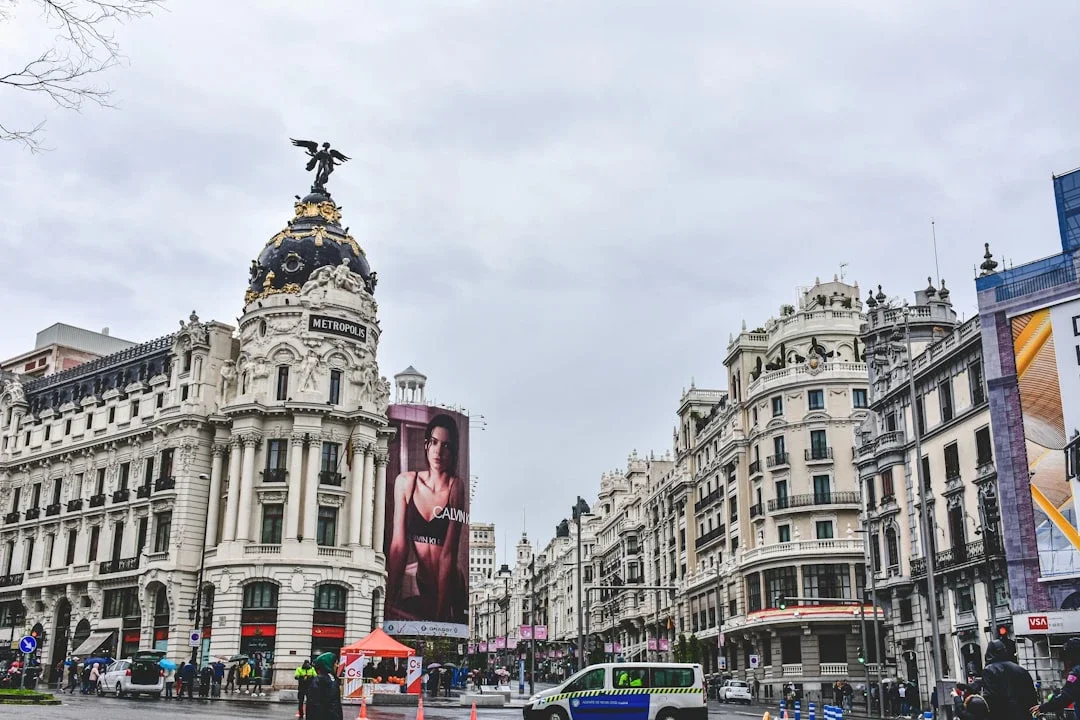
At 660 metres above sea level in the heart of the Iberian Peninsula, Madrid experiences a continental Mediterranean climate — meaning hotter summers and colder winters than coastal Spanish cities like Valencia or Barcelona. The altitude keeps humidity low year-round, which makes both the heat and the cold feel more manageable than the numbers suggest, but it also means rapid temperature swings between morning and afternoon, even in midsummer.
Spring (March–May) is widely considered the most balanced time to visit. Daytime temperatures climb from the low teens in March to the mid-20s °C by May, while rainfall is modest and the city's parks — particularly Retiro — fill with colour. Late April and early May occasionally host major local festivals, so accommodation books up faster than the mild weather might suggest. Pack a light jacket for evenings, which can still dip to single digits in March.
Summer (June–August) brings intense heat: July and August regularly see afternoon highs above 35 °C, and heatwaves pushing past 40 °C are not unusual. Many madrileños leave the city in August, which quietens museums and shortens queues at major sites — a practical upside if you can handle the heat. Carry water constantly, plan indoor activity between 14:00 and 17:00, and note that lightweight, breathable fabrics are essential. Evenings cool to a comfortable 20–22 °C, and the city's terrace culture comes fully alive after sunset.
Autumn (September–November) mirrors spring in comfort. September retains summer warmth (highs around 28–30 °C) while October settles into the pleasant 18–22 °C range. Rainfall increases gradually through November, but prolonged downpours are rare. This is a strong window for combining outdoor sightseeing with gallery visits — the light is soft, crowds thin from their summer peak, and hotel rates begin to ease. A mid-weight layer and a compact rain jacket cover most eventualities.
Winter (December–February) is colder than most visitors expect from Spain. Average highs hover around 9–11 °C, and frost is common overnight, particularly in January. Snow falls in the city centre on average a few days per year — more frequently in the Sierra de Guadarrama just to the north, which becomes a day-trip ski destination. The Christmas period brings festive markets and lights to the Gran Vía and Plaza Mayor, drawing large crowds in late December. Pack a proper coat, warm layers, and waterproof footwear. The trade-off is that winter offers the shortest queues and some of the lowest accommodation prices of the year.
Spring (March–May) is widely considered the most balanced time to visit. Daytime temperatures climb from the low teens in March to the mid-20s °C by May, while rainfall is modest and the city's parks — particularly Retiro — fill with colour. Late April and early May occasionally host major local festivals, so accommodation books up faster than the mild weather might suggest. Pack a light jacket for evenings, which can still dip to single digits in March.
Summer (June–August) brings intense heat: July and August regularly see afternoon highs above 35 °C, and heatwaves pushing past 40 °C are not unusual. Many madrileños leave the city in August, which quietens museums and shortens queues at major sites — a practical upside if you can handle the heat. Carry water constantly, plan indoor activity between 14:00 and 17:00, and note that lightweight, breathable fabrics are essential. Evenings cool to a comfortable 20–22 °C, and the city's terrace culture comes fully alive after sunset.
Autumn (September–November) mirrors spring in comfort. September retains summer warmth (highs around 28–30 °C) while October settles into the pleasant 18–22 °C range. Rainfall increases gradually through November, but prolonged downpours are rare. This is a strong window for combining outdoor sightseeing with gallery visits — the light is soft, crowds thin from their summer peak, and hotel rates begin to ease. A mid-weight layer and a compact rain jacket cover most eventualities.
Winter (December–February) is colder than most visitors expect from Spain. Average highs hover around 9–11 °C, and frost is common overnight, particularly in January. Snow falls in the city centre on average a few days per year — more frequently in the Sierra de Guadarrama just to the north, which becomes a day-trip ski destination. The Christmas period brings festive markets and lights to the Gran Vía and Plaza Mayor, drawing large crowds in late December. Pack a proper coat, warm layers, and waterproof footwear. The trade-off is that winter offers the shortest queues and some of the lowest accommodation prices of the year.