Madrid Trip
Pass
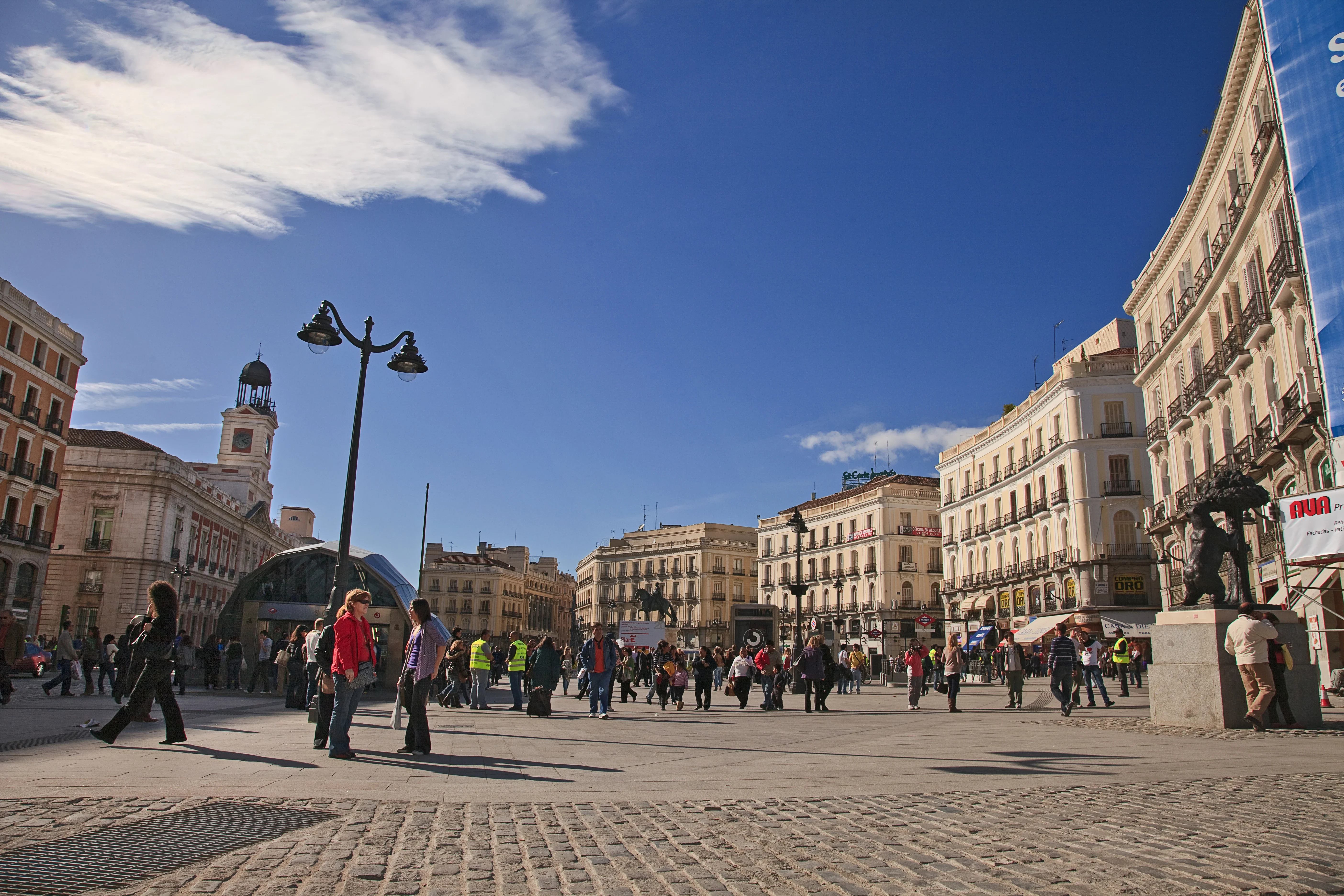
Puerta del Sol

Puerta del Sol: Madrid's Beating Heart and Kilometre Zero

Stand at the geographic centre of Spain's road network, watch the famous clock ring in the New Year, and soak up the constant energy of Madrid's most celebrated public square — free to visit, any time of day.

Square Centro
Puerta del Sol Centro Always open
Every New Year's Eve since 31 December 1962, millions of Spaniards have fixed their eyes on one clock: the tower rising above Puerta del Sol. Its bells dictate the exact moment to swallow the Twelve Grapes — one per chime — a tradition that defines the national countdown to midnight and is broadcast live on major networks including RTVE and Atresmedia. Arriving at the square on any ordinary afternoon, you still feel the weight of that ritual in the architecture around you.

Puerta del Sol sits at the centre of the radial network of Spanish roads, making it the literal zero point from which distances across the country are measured. A small plaque embedded in the pavement on the south side of the square marks Kilómetro Cero — worth finding if you enjoy the kind of geographical footnote that puts an entire nation beneath your feet. The square is free to enter at all hours, which makes it equally suited to a rushed ten-minute stop or a long people-watching session over a coffee from one of the nearby cafés.

The name translates as "Gate of the Sun", recalling a medieval city gate that once stood here and was decorated with a sun motif. Today the space functions as one of Madrid's principal transit hubs, connecting metro lines and bus routes that reach every corner of the city. Its central position in the Centro neighbourhood means that the Prado Museum, the Royal Palace, and the Gran Vía are all within comfortable walking distance, making Puerta del Sol a natural starting point for a day of exploring the capital on foot.

What Makes Puerta del Sol Special

Kilometre Zero

A pavement plaque on the square's south side marks the exact point from which all radial road distances in Spain are measured — the literal centre of the country's road network.

The New Year's Eve Clock

The tower clock's twelve chimes have governed Spain's New Year grape-eating tradition for decades. The celebration has been broadcast live on national television and radio every 31 December since 1962.

Free and Always Open

Entry to Puerta del Sol costs nothing and the square is accessible at all hours, making it one of the most accessible landmarks in Madrid regardless of budget or schedule.

Central Transit Hub

Multiple metro lines and city bus routes converge here, placing the Prado Museum, the Royal Palace, and the Gran Vía all within easy walking distance — ideal as a base for a day on foot.

What Makes Puerta del Sol Worth Your Time

Kilómetro Cero plaque

A small marker embedded in the south-side pavement designates this square as the literal zero point from which all Spanish road distances are measured. Finding it gives the whole country a single fixed address.

The New Year's Eve clock

The tower clock has governed Spain's national midnight countdown since 31 December 1962, broadcast live on RTVE and Atresmedia. Its twelve chimes set the pace for the Twelve Grapes tradition.

Twelve Grapes tradition

One grape per chime at midnight — a nationwide ritual that radiates outward from this single bell tower every 31 December.

Centre of Spain's road network

Every radial highway in Spain traces its distance from this square, making it one of the most geographically significant public spaces in the country.

"Gate of the Sun" heritage

The square's name recalls a medieval city gate decorated with a sun motif that once stood on this exact site, layering centuries of urban history beneath what is now open pavement.

Free entry, always open

No ticket, no closing time — the square is accessible around the clock, making it equally practical for a ten-minute detour or a long café-side stay.

History of Puerta del Sol

The square's name — 'Gate of the Sun' — derives from a medieval city gate that once stood on this spot, reportedly decorated with a sun motif. Over centuries the gate disappeared and the area evolved into the bustling open plaza that exists today. By the mid-twentieth century, Puerta del Sol had become so embedded in national culture that its clock tower became the official broadcast focal point for Spain's New Year's Eve celebrations, a role it has held without interruption since 31 December 1962 on networks including RTVE and Atresmedia.
Price Comparison

Worth it? Do the math.

You save
€11
18% off
Individual ticket Price
Puerta del Sol, Madrid €12,00
Wax Museum of Madrid, Madrid €12,00
Geological and Mining Museum of Spain, Madrid €12,00
Palacio de Liria, Madrid €12,00
Real Fábrica de Tapices, Madrid €12,00
Sum individual €60,00
Madrid City Pass €49,00

Know Before You Go

Admission
Entry is free at all times — no ticket or reservation required.
Duration
A focused visit to locate Kilómetro Cero and photograph the clock tower takes roughly 10–15 minutes; factor in extra time if you plan to linger at a nearby café.
Photography
The square is an open public space, so photography is unrestricted. The clock tower reads best from the centre of the square.
Security
As one of Madrid's busiest squares, the area attracts pickpockets — keep bags zipped and in front of you, especially in dense crowds.
Accessibility
The square is paved and largely flat, making it generally accessible. Multiple metro lines serving Sol station have lift access.
Children
The open paved space and the novelty of Kilómetro Cero make this a quick, engaging stop for families with children of any age.

Best Time to Visit

Our recommendation
Weekday mornings before 10:00, when foot traffic is light and the clock tower and Kilómetro Cero plaque are easy to access without crowds.
Best day
Tuesday to Thursday — fewer tour groups than weekends.
Best time
08:00–10:00, before the square fills with commuters and visitors.
Avoid
31 December evening, unless attending the New Year's Eve celebration — the square becomes extremely densely packed.
Peak season
Summer (July–August) and the Christmas–New Year period bring the heaviest visitor numbers.
Quiet season
January–February (excluding New Year's) sees noticeably thinner crowds and a more local, everyday atmosphere.

Insider Tips

1
Pro strategy

The Kilómetro Cero plaque is set into the pavement on the south side of the square, directly in front of the Casa de Correos building. Most visitors walk straight past it — look down near the building's entrance and you will spot it in seconds.

2
Photo spot

If you want a clear, unobstructed photograph of the clock tower, position yourself in the centre of the square and shoot in the early morning before the foot traffic builds. By midday the foreground fills with tour groups and street performers.

3
Preparation

For New Year's Eve, crowds begin filling the square hours before midnight and the surrounding streets close to traffic. If you plan to be there for the Twelve Grapes broadcast, arrive well before 10 pm and bring the grapes ready-peeled — there is no time to fumble with skins between chimes.

Pass vs. Individual tickets

With Madrid Pass Individual Tickets
Skip the ticket line
Free cancellation up to 24h before
Hop-on/hop-off bus included
Access to 30+ attractions
One booking for the whole trip
Per-attraction ticket required

FAQ

Is there an admission fee for Puerta del Sol? +
No. Puerta del Sol is a public square and entry is completely free at all times.
What is the Twelve Grapes tradition at Puerta del Sol? +
Each New Year's Eve, Spaniards eat one grape per chime of the Puerta del Sol clock — twelve grapes for twelve chimes — to mark the start of the new year. The custom is broadcast live on major national networks including RTVE and Atresmedia, and has been since 31 December 1962.
Where exactly is Kilómetro Cero? +
The Kilometre Zero marker is a plaque set into the pavement on the south side of the square. It marks the central point of Spain's radial road network, from which distances across the country are officially measured.
How do I get to Puerta del Sol by public transport? +
Puerta del Sol has its own metro station served by lines 1, 2, and 3, and is a major bus interchange. Check the official Madrid transport authority website for current routes and timetables.
What can I visit near Puerta del Sol? +
The square sits in Madrid's Centro neighbourhood, within walking distance of the Gran Vía, the Royal Palace, and the Prado Museum, making it a practical starting point for exploring the city centre on foot.

Pass & ticket FAQ

Is Puerta del Sol, Madrid included in the Madrid Pass? +
Yes — Puerta del Sol, Madrid is one of the attractions covered by the Madrid Pass. Scan your pass at the entrance to enter; no separate ticket needed.
Can I skip the line at Puerta del Sol, Madrid with the Pass? +
At most entry-gates you can use the dedicated pass-holder lane, which is usually much shorter than the general-admission line. At peak hours a short wait may still occur; booking an optional timed-entry slot in advance removes that entirely.
How many days is the Madrid Pass valid? +
The pass is offered in several validity periods (typically 1, 2, 3, 4 or 5 consecutive days). Pick the span that covers your planned museum/tour days; the counter starts at first scan, not at purchase.
Can I cancel the pass if my plans change? +
Unused passes can be cancelled free of charge up to 24 hours before your selected start date.
Where do I pick up or activate the pass? +
After purchase you receive a mobile pass by email — no physical pickup needed. Show the QR code at the entrance of Puerta del Sol, Madrid and the other participating attractions.

How to Get There

Address
Puerta del Sol, 28014 Madrid

Detailed directions will be added soon. Use the map links to plan your route.

Sources & Attribution

Image credits
  • Placeholder, own

Ready to Visit Puerta del Sol, Madrid?

Explore Tours on GetYourGuide